
India has built up buffers against cyclical difficulties and has ample foreign exchange reserves to withstand pressure on credit worthiness, S&P Global Ratings said on Thursday. Speaking at the India Credit Spotlight 2022 webinar, S&P Sovereign & International Public Finance Ratings director Andrew Wood said the country has a strong external balance sheet and limited external debt, making debt servicing not so expensive. "The country has built up buffers against cyclical difficulties like those, which we are experiencing right now," Wood said.

Benchmark BSE Sensex rose by over 379 points on Tuesday as gains in oil & gas, banking and auto shares helped the barometer continue winning run for the third straight session. The 30-share BSE benchmark index advanced 379.43 points or 0.64 per cent to settle at 59,842.21. During the day, it jumped 460.25 points or 0.77 per cent to 59,923.03. The broader NSE Nifty climbed 127.10 points or 0.72 per cent to 17,825.25 as 42 of its constituents advanced.

Zero inflation will pave way for rate cuts in the next RBI policy.
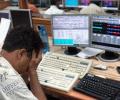
Benchmark equity index Sensex and Nifty gave up early gains and ended lower on Monday as investor sentiment was hit due to unabated foreign fund outflows and losses in index heavyweights Reliance Industries and HDFC Bank. The 30-share BSE Sensex declined 168.21 points or 0.28 per cent to settle at 60,092.97 as 15 of its constituents dropped. The barometer opened higher and touched a high of 60,586.77 in morning session. Later in the day, it fell 297.35 points or 0.49 per cent to 59,963.83.

RBI Governor Raghuram Rajan on Friday said keeping inflation low is the key task for sustainable economic growth of the country.

The broader markets ended in line with the benchmark indices- BSE Midcap and Smallcap indices ended higher by 1.3% and 0.9% each.

India economy clocked a five-year high growth rate of 7.6 per cent in 2015-16.

Sensex ended up 41 points at 29,136 and Nifty gained 4 pts to 8,809.

The economic survey for 2020-21 has suggested revision in the weightage of food items to gauge the true picture of inflation in the country, and said new sources of price data also need to be incorporated in the wake of increasing retail e-commerce transactions. As per the survey, the current spike in consumer price-based retail inflation of food prices is mainly a supply-side phenomenon. The survey noted that the weights of all items in retail inflation are based on the NSO household consumption expenditure survey of 2011-12, adding the weight of food items in the index might have significantly decreased over the decade since then.
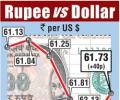
Forex dealers said besides a lower opening in the domestic equity market on fears of a rate hike by the Reserve Bank, higher demand for the American currency from importers put pressure on the rupee but dollar's weakness against other currencies overseas, capped the fall.

The new government will face four big challenges -- subdued growth, the fiscal and current account deficits and sticky inflation, RBI Governor Raghuram Rajan said.

As milk prices rise, analysts have an optimistic view on dairy stocks such as Heritage Foods and Dodla Dairy, hoping the companies' margins will grow in the near to medium term. From a long-term perspective, they believe that a growing population, increasing disposable income and health consciousness will strengthen dairy consumption in India.
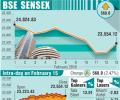
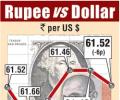
The RBI's macroeconomic report released after the close of markets said upside risks to food inflation remain and that it expects the retail and wholesale price inflation to remain above comfort levels.

After opting for status quo in policy rates, Reserve Bank Governor Raghuram Rajan on Tuesday said any more cut will depend on further transmission of previous rate cuts by banks, softening in inflation and progress of monsoon.

A careful reading of the national income accounts suggests that after a strong recovery from the pandemic, there has been a significant ebbing of dynamism over the last three quarters to more modest levels recently, note Arvind Subramanian and Josh Felman.

Fourth quarter earnings of blue-chips such as Infosys, TCS, Wipro, RIL and inflation data for March will dictate the trend on the bourses in a holiday-shortened week ahead, experts said.

For now, the upside appears to offset damage done to exports by weaker global demand.

Signs of a strong pickup in hiring by companies are adding to the rosier outlook for Indian households.

Inflation has seen some moderation in the recent past, falling from double-digit figures in 2013 to 7.8 per cent year-on-year in August.

From the Sensex basket, Tata Motors, State Bank of India, Tata Steel, Power Grid, NTPC, Bajaj Finserv, Bajaj Finance and Asian Paints were the major laggards.

Street expects RBI to keep CRR unchanged, opt for open-market operations to ease liquidity

ITC was the top gainer in the Sensex pack, rising around 3 per cent, followed by HDFC Bank, PowerGrid, ICICI Bank, IndusInd Bank and NTPC. Nifty surged 176.80 points to a new lifetime closing high of 18,338.55.
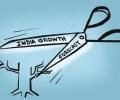
Fitch Ratings on Thursday slashed India's GDP growth projection for FY23 to 7 per cent, saying the economy is expected to slow against the backdrop of global economy, elevated inflation and high interest rate. In June, it had forecast 7.8 per cent growth for India. "We expect the economy to slow given the global economic backdrop, elevated inflation and tighter monetary policy. "We now expect the economy to grow 7 per cent in the financial year to end-March 2023 (FY23) from 7.8 per cent previously, with FY24 also slowing to 6.7 per cent from 7.4 per cent before," Fitch said in its September edition of the Global Economic Outlook.

Don't be surprised if growth in the second half of the financial year drops below 4%, which is where it was in the year before the pandemic, warns T N Ninan.

Despite admitting to price pressures both from food items and input prices, RBI Governor Shaktikanta Das on Wednesday hoped that a normal Southwest monsoon will have a "soothing impact" on inflation pressures and ruled out any wide variations in medium-term inflation forecast from what was given in April. In an unscheduled address earlier in the day amidst the raging pandemic, Das said the overall outlook for the economy is highly uncertain and is clouded with downside risks. He offered a slew of relief and liquidity measures to individuals and small businesses apart from a Rs 50,000 crore special liquidity window to the healthcare sector.

CPI-based inflation on a (year-on-year) basis has come down from 8.59 per cent in April 2014 to 7.80 per cent in August 2014.
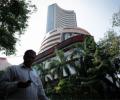
Profit-booking and selling pressure on below-normal monsoon forecast, marred sentiments, traders said.

RBI takes steps to control inflation but the masses are not convinced.

The Reserve Bank of India may soon be given the job of both collecting and processing inflation data.

The revised salaries of central government employees are likely to be paid from July 1, 2016.

The government is confident of meeting the fiscal deficit target of 5.9 per cent of gross domestic product (GDP) and the nominal GDP target of 10.5 per cent despite pressure in the initial months of FY24, Economic Affairs secretary Ajay Seth told Business Standard. Normally the initial months of any financial year see proportionally a higher fiscal deficit because the expenditure is evenly paced while revenue picks up in the later months, he said. "This year the proportional fiscal deficit so far is much closer to the target than in most other years.

On the reduction in the SLR ratio, he said it was a signal from the point of view of long-term reforms.

There's need to address growth, but weak rupee putting pressure on prices.
.jpg)
Although the survey pointed to the softness in demand leveling off, a complete recovery is still some way off.


Food and fuel are two perennial areas of concern.

The country had imported 5.5 million tonnes of pulses last year.

The rupee depreciated 6 paise to 77.50 against the US dollar in the opening trade on Wednesday as a surging American currency in the overseas markets and persistent foreign fund outflows weighed on investor sentiment. Besides, rising global crude prices impacted the domestic unit, forex traders said. However, a higher opening in the domestic equity market restricted the rupee's fall, they added.

The WPI has been in the negative zone since November.
 © 2026 Rediff.com - Advertise with us - Disclaimer - Privacy Policy - Sitemap - Feedback - About us - Terms of use - Grievances